



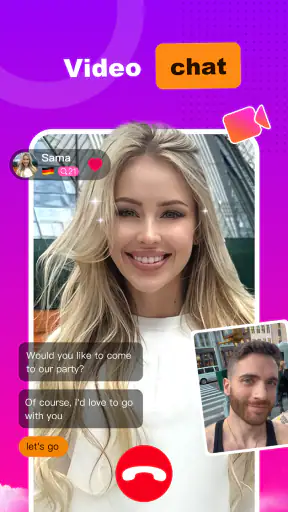

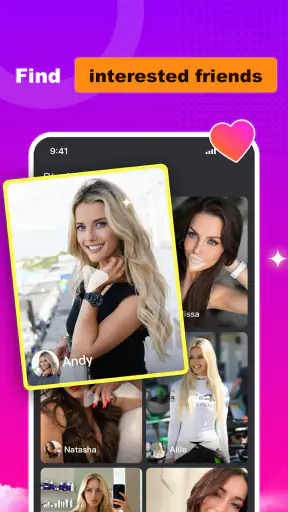
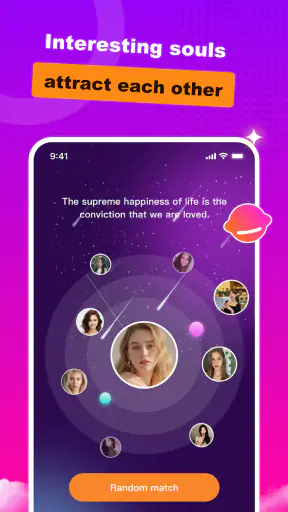
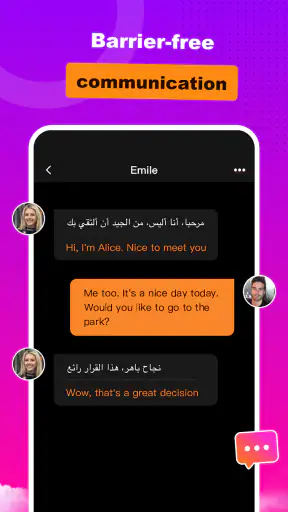

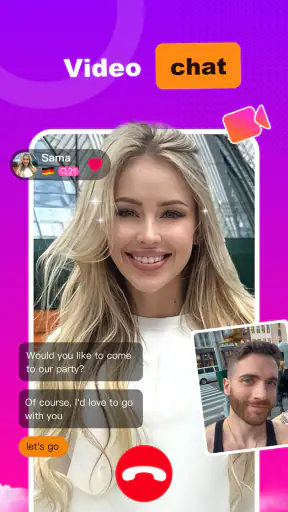
I approached TeeseMee as a social app for people who want conversation to begin quickly, rather than as a traditional messaging service where I first build a contact list. Its focus is meeting strangers through text and video, with a strong emphasis on live interaction and the possibility of romantic or casual connections. That makes the experience more immediate than a normal social network, but also more dependent on timing, confidence, and the quality of the people who happen to be available.
The app is free to install, and Fierce Tiger Studio presents it for mature users. It is rated Mature 17+, which feels important here because the central idea involves communicating with unknown people and may include adult-oriented conversations. I would not treat that label as a substitute for personal caution, but it does set a clearer expectation than a general-purpose chat app. In my view, TeeseMee is best understood as a spontaneous social discovery tool, not a replacement for private messaging with people I already know.
How TeeseMee feels when the connection is live
The first thing I noticed about this kind of app is how much the network shapes the mood. In a conventional social platform, a slow connection may delay a feed or make a photo load gradually. In a stranger video chat app, the same problem affects the conversation itself. A frozen image, delayed audio, or sudden drop can turn a promising exchange into an awkward pause before either person has had a chance to decide whether they actually get along.
When the connection behaves well, the format has a useful advantage: it removes some of the effort involved in starting a conversation. Text gives me a lower-pressure opening, while video can make an interaction feel more immediate once both people are comfortable. I like that difference because not every moment calls for a camera. Sometimes I want to exchange a few messages first and decide whether moving to video makes sense.
That flexibility also creates a trade-off. A text conversation can be easier to control, but it may leave more room for misunderstandings or people presenting themselves differently than they would on camera. Video offers stronger social cues, yet it asks for more confidence and a more reliable connection. I would not assume that one mode is automatically safer or better. The right choice depends on how much information I want to share and how quickly I want the interaction to become personal.
A practical example is a short evening break after work. I might open the app intending to have a few light conversations, begin with text, and move to video only if the exchange feels respectful. That workflow is more comfortable than immediately accepting every video invitation. It also gives me a natural exit point: if the messages are vague, pressuring, or uncomfortable, I can stop before bringing the camera into the interaction.
The strongest part of TeeseMee is its immediacy, but immediacy works only when I keep control of the pace. The app encourages quick contact with unfamiliar people, so I have to supply the boundaries that a slower, more familiar social circle would provide automatically.
Why a stable connection matters more here than in ordinary social apps
Video chat is especially sensitive to movement between networks. A conversation that starts smoothly at home can become less dependable when I walk outside, enter a lift, move through a busy station, or switch between mobile data and Wi-Fi. Even without a visible error, a delay can make both people talk over each other. That is not necessarily a problem with the other person or with the conversation; sometimes the connection simply cannot keep up with live exchange.
I found it useful to think of video as the higher-bandwidth commitment and text as the lighter starting point. If I am in a place where the signal may change, text is the sensible option. If I am settled somewhere with a dependable connection, video has a better chance of feeling natural. This is more than a technical preference: it changes whether the app feels relaxed or frustrating.
TeeseMee is therefore less suitable for people who expect every interaction to work like a standard asynchronous chat. Its appeal comes from the live element, and the live element is vulnerable to weak service, background activity, and crowded networks. For someone who mainly wants to send messages and return hours later, a conventional messenger or community platform would probably be a better fit.
Using it in real mobile situations
On a phone, the app makes sense for short sessions rather than for a conversation I leave running all day. I can imagine using it during a quiet break, while waiting for an appointment, or when I feel like meeting somebody outside my usual circle. Those moments suit the app’s spontaneous character, but they also create distractions. A public place may be noisy, private conversation may be difficult, and a video call can reveal more of my surroundings than I intended.
I would choose text when I am in a café, on public transport, or anywhere other people can overhear me. Video is better reserved for a place where I can pay attention and avoid showing personal details in the background. This is one of the less obvious decisions that improves the experience: the best mode is determined not just by what the other person wants, but by where I am physically using the app.
Battery and data are practical concerns too. Live video generally demands more from a phone than short text exchanges, so a long session can be inconvenient when the battery is already low. I would avoid beginning a video conversation when I need the phone for navigation, an urgent call, or another task soon afterward. TeeseMee is designed around social attention, and splitting that attention can make the interaction worse for both sides.
The app’s mature positioning also changes how I would use it around other people. I would not open it casually in a family setting or hand the phone to a younger person. The 17+ age guidance is a meaningful boundary, especially because strangers may steer conversations toward topics that require adult judgment. Anyone sharing a device should keep that in mind rather than treating the app like a harmless general chat tool.
What to do when a conversation goes wrong
Not every failed interaction is a technical failure. Sometimes a match is simply uninteresting, the other person is too aggressive, or the conversation moves in a direction I do not want. In those cases, I do not try to rescue the exchange out of politeness. Ending early is a sensible use of the app, particularly when the whole point is to meet people quickly rather than maintain an obligation to every stranger.
Connection failures require a different response. If video becomes choppy, I would first stop trying to carry on through overlapping speech. A short text message can clarify whether the other person is still present and whether restarting the conversation makes sense. If the problem continues, leaving and trying again later is more useful than repeatedly blaming the other person or assuming they have lost interest.
This recovery pattern is worth remembering because live chat encourages instant judgments. A blank screen can look like rejection, while a delayed reply can look deliberate. I try to separate the social question from the network question: is the person responding poorly, or is the connection preventing a normal exchange? That small pause avoids unnecessary conflict and makes it easier to leave without drama.
There is also a personal recovery step after an uncomfortable interaction. I would not move from a stranger conversation straight into sharing a phone number, social profile, workplace, or home details simply because the first few minutes felt exciting. A smooth video call proves only that the call happened smoothly. It does not establish trust, identity, or good intentions.
For that reason, TeeseMee works best when I treat each interaction as a limited introduction. I can enjoy the novelty without assuming that a stranger deserves access to the rest of my digital life. If a conversation develops naturally, trust can grow later through choices I make deliberately. The app does not need to become my main social identity for it to be useful.
Keeping mobile data and attention under control
Because the service is free to use at the basic purchase level, it is easy to think the only cost is time. That would be too narrow. Video can consume mobile data, and spontaneous sessions can last longer than planned. I would begin with text when I am away from Wi-Fi, switch to video selectively, and avoid leaving a live session open while doing something else. This keeps the app from becoming an invisible drain on both data and attention.
TeeseMee includes in-app purchases ranging from $0.99 to $99.99 per item. That wide range is a reason to make decisions calmly rather than buying during an emotionally engaging conversation. I would first use the free experience long enough to understand whether the app’s style suits me. If a paid option becomes tempting, I would ask what specific problem it solves and whether the benefit matters to the way I actually use the service.
This is particularly important in a stranger-focused environment. A lively conversation can create a sense of urgency that is not necessarily justified. I prefer to separate the social experience from spending decisions: enjoy the chat, close the session, and consider any purchase later. That simple habit reduces the chance of paying merely because a moment felt exciting.
Data-conscious use also means choosing the right setting before starting video. A private Wi-Fi connection may be more comfortable than a busy public network, but I would still avoid assuming that any Wi-Fi signal is equally dependable. If the picture and audio are unstable, switching back to text can preserve the conversation without forcing the phone to maintain a poor live stream.
There is a second kind of economy here: attention. The app’s quick-contact design can encourage repeated checking, especially when one conversation ends and another is immediately available. I would set a clear stopping point before opening it. That makes the experience feel intentional instead of turning a short break into an unplanned hour of fragmented chats.
How it compares with familiar social alternatives
Compared with a normal messaging app, TeeseMee offers discovery before familiarity. A messenger is usually strongest when I already know the people I want to contact. TeeseMee is aimed at the opposite moment: I want to meet someone new without first arranging an introduction elsewhere. That can feel refreshing, but it also means more uneven conversations and less predictable social context.
Compared with a large social network, the app is more focused on direct interaction. A social network lets me browse profiles, follow topics, and communicate gradually through public activity. Here, the central value is the encounter itself. I spend less time building a visible profile or following a feed and more time deciding whether a live exchange is worth continuing.
Compared with a dating service, TeeseMee appears more spontaneous and less structured around a carefully prepared profile or a slow matching process. That may appeal to someone who dislikes filling out detailed information before speaking to anyone. On the other hand, people seeking deliberate compatibility checks, extensive profile context, or a clearly organized dating workflow may prefer a dedicated dating platform.
Its combination of text and video also distinguishes it from anonymous text-only chat spaces. Video can make a conversation feel more human, but it raises the stakes around privacy and presentation. I would choose TeeseMee over a text-only alternative when immediate social presence matters to me; I would choose the text-only option when I want stronger distance and lower exposure.
Who will enjoy it, and who should skip it
I think TeeseMee suits adults who are curious, comfortable with short conversations, and willing to manage boundaries without expecting every contact to become meaningful. It can be a good choice for someone who wants global interaction and prefers live exchange over scrolling through posts. The app is also appealing if I want to test the social chemistry of a conversation rather than spend a long time composing messages.
I would skip it if I dislike talking to strangers, need highly predictable conversations, or want a platform built mainly around existing friends. It is also not the right choice for anyone under the stated age guidance. People who are particularly sensitive to interruptions, unstable video, or unexpected adult topics may find a more controlled community app easier to use.
Its reception suggests that many users find the concept worthwhile: TeeseMee holds a 4.5 average from around 18 thousand ratings and has passed 5 million installs. Those figures indicate substantial interest, but they do not guarantee that every session will be enjoyable. Stranger-based apps vary by time, location, language, and the people available at that moment, so my experience can differ sharply from another user’s experience.
The app was released on April 19, 2024, and the current version is 1.5.6. It supports devices running Android 7.0 or later. Those details make it accessible to a broad range of Android phones, although accessibility on paper does not remove the importance of a capable connection for video. A compatible operating system is only the starting point; the quality of the live session still depends heavily on the mobile situation.
My practical approach to getting more from it
I would begin with a short text exchange, avoid revealing identifying details, and treat a request for video as an invitation rather than an obligation. Before accepting, I would check my surroundings, the strength of my connection, and whether I actually have the time to pay attention. This small routine makes the app feel more manageable and prevents the live format from dictating my behavior.
When a conversation is promising, I would keep the first video call brief enough to end comfortably. A short, positive interaction is better than stretching it until the connection fails or the conversation becomes repetitive. If the person is respectful about boundaries and technical interruptions, that tells me more than an enthusiastic opening line does.
I would also avoid treating a stranger’s profile or presentation as proof of identity. The app’s appeal is that it makes meeting people easy, but easy access should not be confused with verification. I would never send money, share sensitive documents, disclose my exact location, or move to another service under pressure. Those are sensible rules for any stranger-chat platform, and they matter even more when video creates a quick sense of familiarity.
After a poor session, I would not judge the entire app immediately. I would try a different time or switch from video to text, because network conditions and user availability can change the experience. At the same time, I would not force myself to continue if the pattern remains uncomfortable. A useful social app should fit my boundaries, not require me to ignore them.
My connectivity verdict
TeeseMee succeeds when I want spontaneous contact and have the right conditions for it: enough time, a reasonably stable connection, and the willingness to speak with unfamiliar people. Its text and video combination lets me choose how exposed and immediate the interaction feels. That is more nuanced than a service built around one communication mode, and it gives the app a clear place among social discovery tools.
Its weaknesses are closely tied to that same design. Live conversations can be disrupted by network changes, public environments, limited battery, or simple differences in social expectations. The free entry point is inviting, but the presence of in-app purchases means I would approach spending carefully. Most importantly, the mature stranger-chat setting requires active judgment rather than passive browsing.
After using it, I would recommend TeeseMee to an adult friend who wants quick global conversations and understands that not every encounter will be worthwhile. I would suggest starting with text, moving to video selectively, and keeping personal information private until trust has been earned over time. For someone who wants a calm, predictable, friend-centered messenger, I would point elsewhere.
My final view is positive but measured: TeeseMee is most convincing as a controlled doorway into live social discovery, not as an automatic shortcut to friendship or romance. When I manage the connection, the setting, the data use, and my boundaries, the app can make meeting strangers feel immediate and engaging. When those conditions are poor, a slower and more familiar alternative is the wiser choice.


